
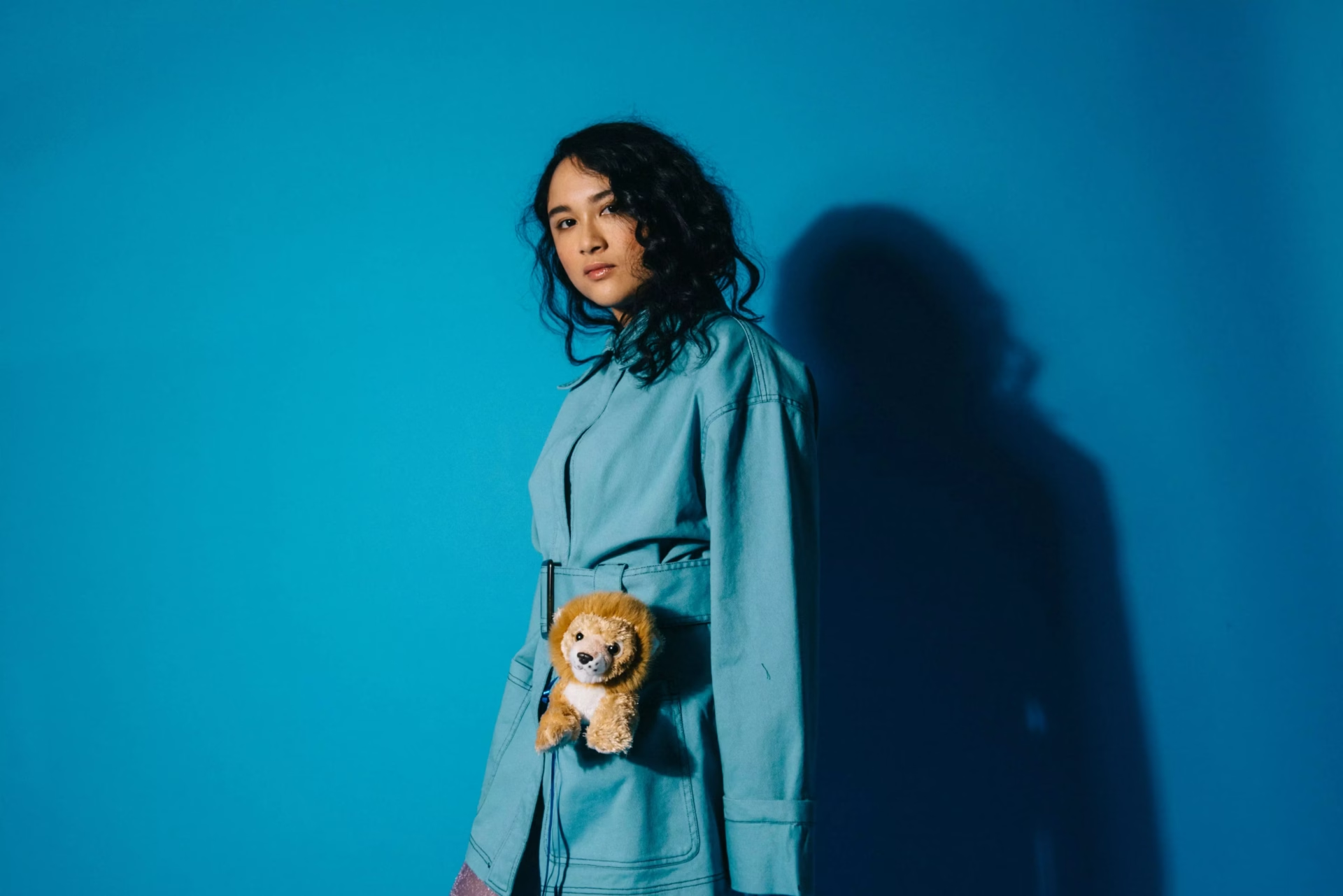
Anak Ko, meaning "my child" in tagalog (an Austronesian language native to the Philippines), is the name of dream-pop singer Jay Som's sophomore album. She's the first to admit that she felt a little bit of pressure going into it.
"When you end up finding out that there are more people listening to your music, it's some sort of performance anxiety artists or just anyone in general struggles with," she says over the phone from her home in Los Angeles. "You sort of get really nervous and self-deprecating about what's next because the standards for people making records is that you would do it every two years or would have to release something every single year. It's a lot of pressure to tour for eight months out of the year then someone's like, 'Hey, you gotta make a record, you gotta make it in six months.'"
Melina Duterte, as she is also known, may have felt overwhelmed, but she managed to create a body of work that is at once not overthought and all her.
"I feel like this is the first time where I feel relaxed and honest about what I really want to convey in music," she says. "I feel like this record really shows my personality, more so than before."
<iframe width="620" height="349" src="https://www.youtube.com/embed/Wd5FyYa_H_I" frameborder="0" allow="accelerometer; autoplay; encrypted-media; gyroscope; picture-in-picture" allowfullscreen></iframe>
The nine-track follow-up to Everybody Works, out today, represents a new sonic chapter that comes after some major changes for the 25-year-old, including a move to the City of Angels and becoming sober. The Recording Academy spoke to Duterte about the where she is creatively now, being sober, producing for other artists and more.
You're from the Bay, home of hyphy music and Green Day. What would you listen to growing up?
I did listen to Green Day. And I listened to a lot of Blink-182, so those bands really helped me learn guitar, just like pop, punk. What did I listen to growing up? I feel like I listened to a lot of music my dad listened to, like funk music, a lot of r&b, lots of Death Cab For Cutie, was the main one, for sure.
Do you feel like what you listened to growing up has influenced the music you make now in any kind of way?
Yeah, I think so. I feel like I'm always really willing to have that influence of like funk in my bass parts, guitar parts too. Just a very super-fun genre to play.
It's been a couple of years since you released an album. What was your state of mind going into the making Anak Ko?
I think I was very overwhelmed, but at the same time, I felt more relaxed than before. I think it was just natural pressure. When you end up finding out that there are more people listening to your music, it's some sort of performance anxiety artists or just anyone in general struggles with. You sort of get really nervous and self-deprecating about what's next because the standards for people making records is that you would do it every two years or would have to release something every single year. So it's a lot of pressure to tour for eight months out of the year then someone's like "Hey, you gotta make a record, you gotta make it in six months." It's like a weird deadline to force yourself to come up with art and be creative. Not everyone can do that. But I think this time around, I was inspired to take control again, and get out of this funk from feeling pressured and overwhelmed by the music industry, because it can very scary, and can be very ugly, to be honest.
What helps you stay yourself and stay creative?
I think what helps me stay creative is; I just need to force myself to listen music all the time. There was a time, where I wasn't listening to it, ever. Especially, when I went touring, in the past two years. I was feeling very uninspired because I was playing my own music all the time, every single night, for two months. It was driving me crazy, when you're always just thinking about yourself, and I hate thinking about myself 24/7. I like to work with other people and record other people, and I think that comes across in my music, it helps me learn about my own stuff. I enjoy working on creative projects with other people.
What are you listening now?
I am definitely not listening to my own music right now. I got back into a lot of The Radio Dept. kind of stuff. I've liked them for a long time, since I was a kid, but I started listening to more of their albums more intentionally, like Lesser Matters and their other album Pet Grief. [Also listening to] some concert stuff, Oasis, always Oasis.
If you could sum it up Anak Ko in your own words, what would you say?
I think of the word "comfortable." I feel like this is the first time where I feel relaxed and honest about what I really want to convey in music. I feel like this record really shows my personality, more so than before. Which is cool, because I have more people playing on it, and singing on it too, but I think it's still very much like me.
The album's title translates to "my child." How did the title come to be?
Do you feel like it also invites your fans to know more about your Filipino identity?
Yeah, I think it does. I really love when people name things after their different language, it gives more prospective on their background and their culture.
<iframe width="620" height="349" src="https://www.youtube.com/embed/t0Hns30GEGo" frameborder="0" allow="accelerometer; autoplay; encrypted-media; gyroscope; picture-in-picture" allowfullscreen></iframe>
How was is for you, growing up bi-cultural, in the U.S.?
I feel like anyone that has parents that are immigrants, has a very hard struggle of identity as kids. You're growing up and super-hormonal, but you're also living in America, your parents are immigrants, and they do go through sets of challenges that not many Americans go through. Like it's five times harder for them and you also suffer from that. You suffer from being torn between "Should I be more of this side, or should I be more of this? How do I integrate both of them together?" It's very frustrating, because you want to assimilate to one thing. When you're growing up, it's very hard and I think that a lot of people can struggle with internalized racism, when they're young. Yeah, it just adds to the list of frustrations as kids. And school have really amazing, positive, and really fun [ways kids can] learn about [their] family's history and culture. It's super beautiful to learn where the parents comes from, where your family comes from and what not.
I'm also a child of immigrant parents and I feel like for me, music became a space to blend my two culures without judgment. Just looking at some of my playlists growing up and them being in Spanish—and English music became a space where I really didn't feel judged. Was music that for you too?
Oh yes, I think that's one of the reasons why I got into it. As a kid, in school in general, I was very much a loner. I always had my headphones on, because I was listening to music, it made me feel safe and I think writing music and recording it at such young age, was my way to express myself. It's very cathartic for a lot of people, myself included. I find it like an necessity, at that age too, you're going to shows to, you want to find a community. I think growing up I didn't really have [community]. It was mostly white-dominated everywhere, especially in my hometown. But now, going into 2019, I see [the] music industry now and it is changing. People are taking baby steps towards being more inclusive with women and people of color, trans people, people who aren't white men. Which is really cool but I didn't have that when I was growing up and it feels really good to see kids now have all these people to look up to. It feels real good, you know.
This album came after your decision to become sober. What lead you to that decision?
I think the music industry as a whole really encourages drinking and you see that in shows where they give you drink tickets or they give you free beer. It's so bizarre because musicians aren't making money at all on tour and here you're giving them a vice so they can party. Not many people drink in their workplace because it's not encouraged to have a beer. I think it's because shows happen late at night and they are in a party atmosphere. I think touring a lot during the Everybody Works period just really opened my eyes about how I want present myself and how I want my music to be reflected, relating to my personality too. I just think it's the right move. I feel like when you strip away so many parts of drugs and alcohol and the way it makes you feel, you become more challenged in life. You face things more head on, rather than suppressing them and being like, "I'll just have a drink right now."
I think it also comes from—I met my partner, a year and a half ago and she really taught me how special it can be to be sober.
You have a lot more collabs on this album. What led to the decision to bring some new people in?
I think I'm very tired of hearing myself drum. I just don't have time to practice it and it's hard to have a drum set in the house too. I also kept thinking, I have so many talented music friends, why wouldn't I put them on an album. It just started making more sense, as I started adding more people, I felt like I could step outside of my music bubble and really have a different view of how I want the song to sound and how I want to be arranged, played and whatnot.
You're doing so much on your own music. You produce, and engineered and recorded the album by yourself at home. How was that experience?
It's always just been that way. I feel like I'm going back to parents, they've always challenged me to teach myself mostly everything. They work so many jobs and they still do, they taught me so many valuable lessons about "If you want to do music, we will support you, but you have to keep working hard, keep learning about it and do things yourself." And I think that gave me the push, in my early years, to experiment and not hold hands with anyone. Ideally, they really raised me to be independent about music if I wanted it to be more of a career rather than a hobby. Which is cool, because most people of Asian cultures, you're not supposed to do anything to do with art. You are supposed to be a nurse or a doctor.
So, I'm very grateful that my parents taught me so much about being independent and working with my stuff. I feel like this benefits me in the long run because I love being able to have complete control, and being knowledgeable about things, but also, not super egotistical about it because you can learn so much about recording it. It's endless. There's so many things you can learn throughout your life, when it comes to music production.
<iframe width="620" height="349" src="https://www.youtube.com/embed/rqlNHKN8me4" frameborder="0" allow="accelerometer; autoplay; encrypted-media; gyroscope; picture-in-picture" allowfullscreen></iframe>
How is it different when you produce and engineer for other artists?
I think I have a lot more fun. I think it's kind of cool to not always think about myself and not always get myself to play music. It brings me back down to earth. It might be when you work with other people, you can learn so much from them. You gain different ideas, views and perspectives. You learn how to communicate better. You get to know and like their music too, you can still learn so much from them. I feel like I've gotten better and I apply that to my own music too. The amount of people that I work with or I mix their music in shift. Overall, it's just fun to me.
Did you face any challenges in making the album?
I think mentally just trying to get over the fact of trying to force myself to be super ambitious and clear mental for this new record. That's where, in the beginning stages, I was very focused on the sound and how I wanted it to sound at the end. But I think that was the wrong decision on my part, I kind of nipped that in the bud early on. I was like, no just make music that you want to make, in the moment. Do what you want, right now. Instead of thinking ahead. I feel like with my music and recording, it's very topical, it has to be very recent. So, this here, before I turn this in for mixing, I scrapped half of the songs and I wrote some new songs for Peter that ended up being the final song so it was just really to just make new songs.
What's something about the album that you are most proud of?
I'm proud of how, in my brain, I feel like this album is the most simple. I think it's very straightforward, it's short. I feel like the ideas are all there and I really like that about it. I feel like I didn't like that before, I was like, "Oh man I don't know if people are going to like this," I feel like they're going to be bored, or something like that. I think that I like that I didn't go too crazy for the sake of going crazy.
Your parents have been very supportive of you going to music. How do they feel now with your success?
Hmm, they are very, very, extremely supportive. I mean my mom, she wears my hat all the time and my merch. My dad is extremely supportive, his Instagram is a Jay Som Instagram. He's always showing his co-workers and my new family videos of performances and he's always telling family and, his friends to go to my shows. It feels real good, it feels like, I think to me, that's a form of success: to see your parents happy about what you're doing.
Saida Dahir's Spoken-Word Debut Is A Powerful Love Letter To Black Muslim Women
