
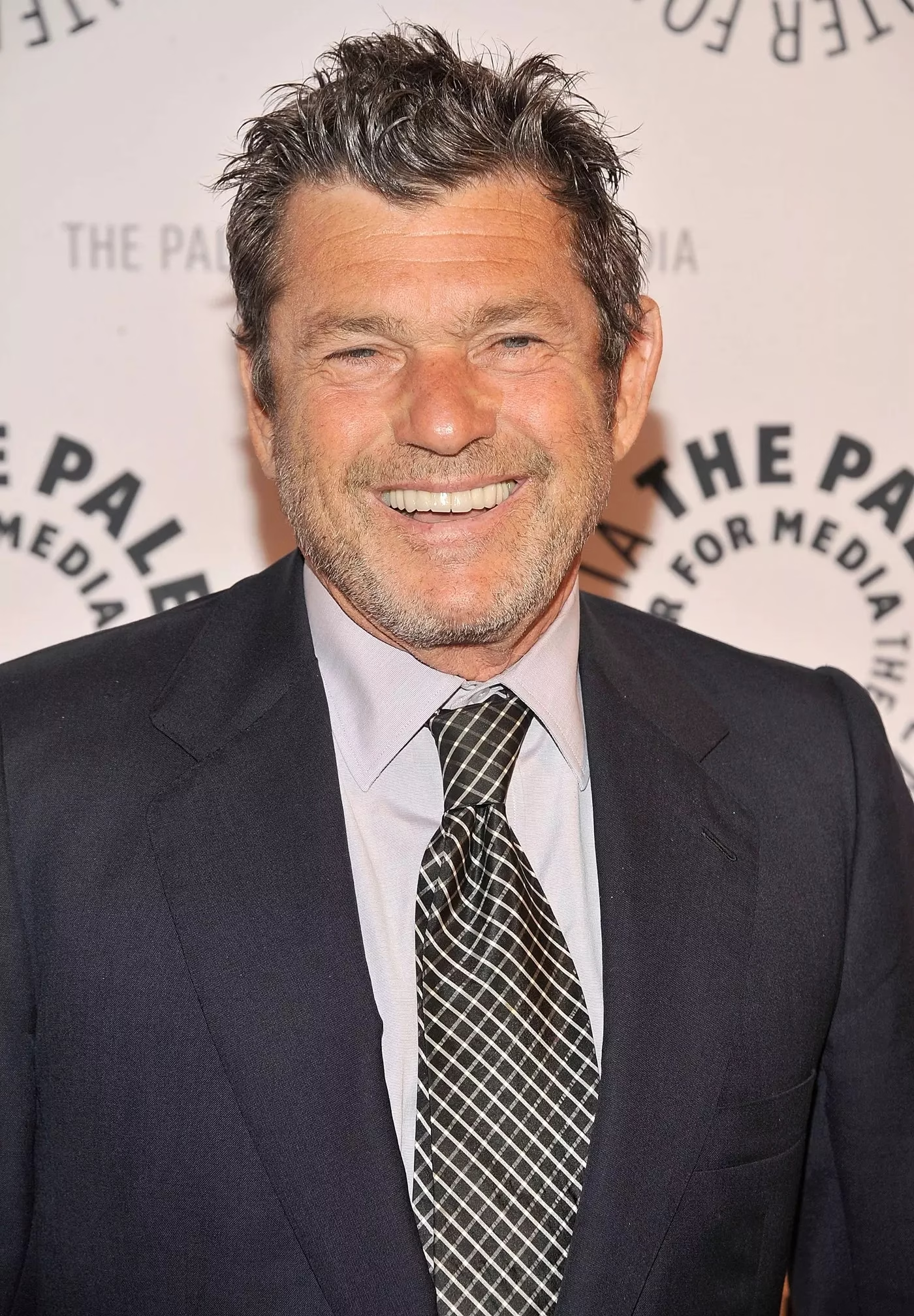
Historic covers and cultural coverage, spanning 50 years, separate the segments of the HBO documentary Rolling Stone: Stories From The Edge, presented in two parts next week on Nov. 6–7. The magazine's co-founder and publisher Jann Wenner unites them, showing how his personal vision and voice uniquely shaped America's storms of change since the late 60s and how the public came to perceive them. His early choices elevated Annie Leibovitz and Hunter S. Thompson to international attention, and he personally produced the 1969 self-titled album by Boz Scaggs. Wenner was just getting warmed up.
At the movie's New York City premier on Oct. 30, co-director Blair Foster told Billboard on the red carpet that "very early on they were covering the art scene in the Bay Area and politics. I didn't think that came until a little bit later, but really you see it within the first year of the magazine." At the time this connection between music and broader social change was radical.
<iframe width="620" height="349" src="https://www.youtube.com/embed/qj-xQddmoI0" frameborder="0" allowfullscreen></iframe>
As the decades ticked by it has come to seem almost taken for granted, but it was Wenner and Rolling Stone's imprint that turned the latest music into a lens through which readers could view everything — war and voices raised against it, civil rights and voices raised against equality, impatient youth fighting for alternative lifestyles. Musicians, actors and other influential artists reflected all of this in their work, and Rolling Stone had the credibility to cover all of it.
More recently the magazine has been looking for a buyer, after an investigative piece took a wrong turn leading to sizable legal costs and damages. But Wenner's visionary outlook still leads along with new generations of writers and editors, many given their breaks by Rolling Stone.
Now that everything is or seems digital, print doesn't mean what it used to. But thanks to HBO's Rolling Stone: Stories From The Edge, next week we'll have a good chance to see how for 50 years, one music magazine showed how contemporary music meant everything.