
About Taylor Swift
About Taylor Swift
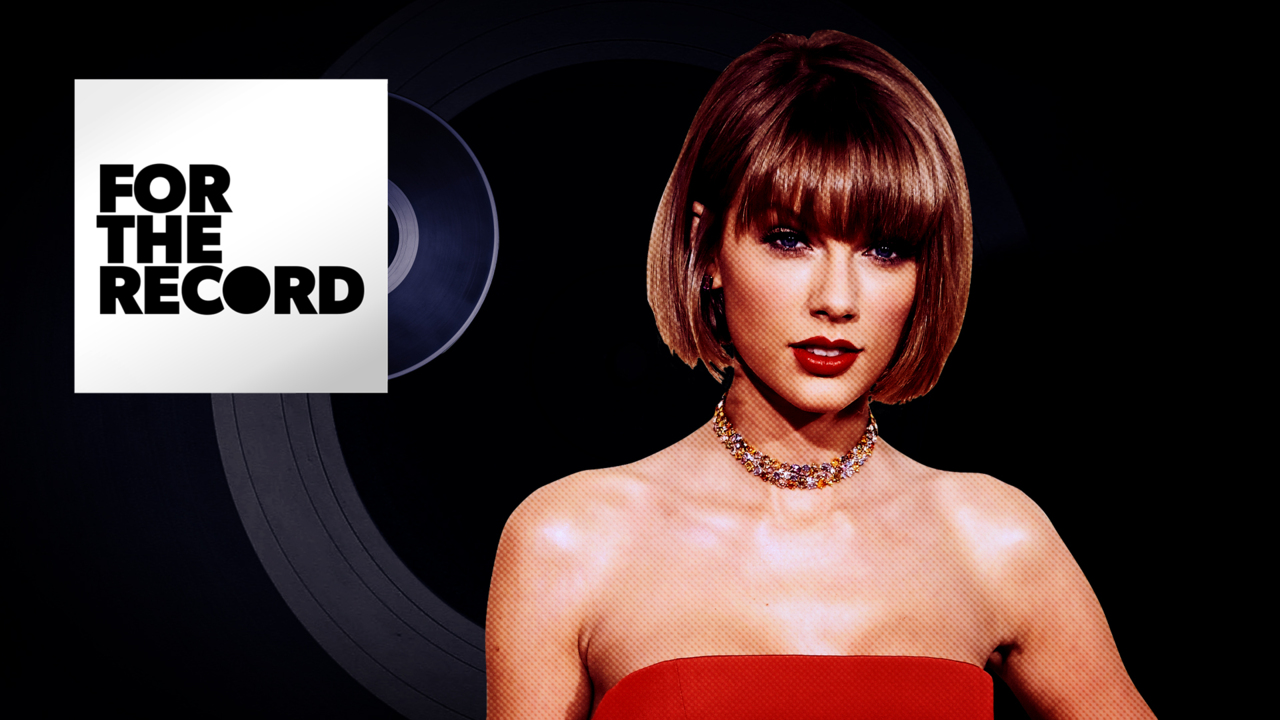
Born Taylor Alison Swift on December 13, 1989, in Reading, Pennsylvania, Taylor Swift is the most Grammy-decorated Album of the Year artist in the history of the Recording Academy — a record she holds alone. With 14 Grammy Awards from 58 nominations across a career spanning country, pop, folk, alternative, and beyond, Swift has become not only one of the best-selling music artists of all time but one of the most critically recognized artists of her generation.
Early Career and Country Beginnings
Taylor Swift began her professional music career as a teenager in Nashville, signing with Big Machine Records and releasing her self-titled debut album in 2006 at age 16. The album's lead single "Tim McGraw" reached the Top 40 while she was still in high school, announcing an artist with an unusually direct and confessional songwriting voice. Swift wrote or co-wrote every song on her debut — a creative autonomy that would define her entire career.
Her second studio album, Fearless, arrived in 2008 and transformed her from a promising country newcomer into a mainstream phenomenon. Anchored by the crossover smash "Love Story" and the Top 5 hit "White Horse," Fearless topped both country and pop charts and became the best-selling album in the United States in 2009.
At the 52nd Grammy Awards in 2010, Swift made history. Winning Album of the Year for Fearless, she became the youngest artist in Grammy history to win in that category — a record she held for over a decade. She also won Best Country Album and Best Country Song for "White Horse" that night, taking home four Grammys in total and signaling the Recording Academy's recognition of an artist far beyond her years.
The Speak Now and Red Eras
Speak Now (2010), Swift's third album, was written entirely by Swift alone — a rare achievement for a major-label pop star — and earned her a Grammy nomination for Best Country Album at the 54th Grammy Awards in 2012. She performed at the ceremony, playing a banjo alongside a theatrical stage production that underscored her growing ambition as a live artist.
Red (2012) pushed further toward pop territory, blending country roots with rock, dubstep, and maximalist pop production. "We Are Never Ever Getting Back Together" became her first number-one pop single, and "Mean" — from Speak Now — won Best Country Solo Performance and Best Country Song at the 54th Grammy Awards in 2012. The Grammy Museum debuted The Taylor Swift Experience exhibit in 2014, featuring handwritten lyrics, photographs, and the banjo she played at that ceremony.
1989 and the Pop Transition
With 1989 (2014), Taylor Swift completed her genre transition fully and publicly, delivering a pure-pop album that erased any country classification. Produced primarily by Max Martin, Shellback, and Jack Antonoff, the album spawned five number-one singles — "Shake It Off," "Blank Space," "Style," "Bad Blood," and "Wildest Dreams" — and became one of the best-selling albums of the decade.
At the 58th Grammy Awards in 2016, 1989 swept the ceremony's major pop categories. Swift won Album of the Year for the second time, becoming only the fourth artist in history to win the award more than once, joining Frank Sinatra, Paul Simon, and Stevie Wonder. She also won Best Pop Vocal Album and the music video for "Bad Blood" won Best Music Video, giving her three Grammys on the night. In her acceptance speech, she became the first solo woman to win Album of the Year twice.
Reputation, Lover, and the Road to Folklore
Following 1989, Swift retreated from the public eye before returning with reputation (2017), a darker, more guarded album that addressed media scrutiny and public persona. Despite massive commercial success — the reputation Stadium Tour became the highest-grossing tour in US history at the time — the album received no Grammy nominations, a rare gap in her awards history.
Lover (2019), a brighter and more romantic record, received a nomination for Best Pop Vocal Album at the 62nd Grammy Awards in 2020. Though it did not win, the album's era coincided with a period of significant personal and artistic reinvention that set the stage for what came next.
Folklore and a Third Album of the Year Win
Released as a surprise in July 2020 during the COVID-19 pandemic, Folklore was a radical departure — a hushed, indie folk-adjacent album made in collaboration with Aaron Dessner of The National and longtime collaborator Jack Antonoff. Its introspective, literary songwriting was met with immediate critical acclaim, with many publications naming it album of the year before any awards cycle had begun.
At the 63rd Grammy Awards in 2021, Folklore won Album of the Year, giving Swift her third win in the category and her first as a solo woman — Adele having been the only woman to previously win twice. She also won Best Pop Vocal Album for Folklore that night. The win cemented Folklore as a career-defining creative achievement and one of the most acclaimed albums of the pandemic era.
Evermore, Midnights, and the All-Time Record
Released just months after Folklore, Evermore (2020) continued the indie folk direction and was nominated for Album of the Year at the 64th Grammy Awards in 2022. Though it did not win, its nomination meant Swift had two consecutive surprise-released albums competing in the same general field — an unprecedented commercial and creative achievement.
Midnights (2022) marked a return to synth-pop, produced entirely with Jack Antonoff. The album shattered streaming records on release, becoming the fastest album to reach one billion streams on Spotify. At the 66th Grammy Awards in 2024, Midnights won Album of the Year and Best Pop Vocal Album — giving Swift her fourth Album of the Year win, breaking the all-time tie with Frank Sinatra, Paul Simon, and Stevie Wonder. No other artist in Grammy history has won Album of the Year four times.
The Tortured Poets Department and the 67th Grammys
The Tortured Poets Department (2024), announced from the Grammy stage during Swift's Midnights acceptance speech, became one of the best-selling albums of the year. At the 67th Grammy Awards in 2025, it received 6 nominations including Album of the Year, Record of the Year ("Fortnight"), Song of the Year ("Fortnight"), Best Pop Vocal Album, Best Pop Duo/Group Performance ("us."), and Best Music Video ("Fortnight"). The album did not win, but the sweep of nominations confirmed Swift's continued dominance of the Grammy general field across back-to-back album cycles.
>I'm intimidated by the fear of being average.
- Born Taylor Alison Swift on Dec. 13, 1989, in Reading, Pennsylvania.
- At age 16, Taylor Swift scored her first Top 40 hit with "Tim McGraw," a song featured on her 2006 eponymous debut album. Swift’s 2008 studio album, Fearless, was her first No. 1 album and spawned the Top 5 crossover hit "Love Story."
- Swift is the first and only artist to win the GRAMMY for Album Of The Year four times: Midnights (2024), Folklore (2021), 1989 (2016), and Fearless (2010).
- The singer/songwriter made her GRAMMY performance debut at the 51st GRAMMY Awards in 2009, performing "Fifteen" with Miley Cyrus.
- When she was 10, Swift penned the poem "Monster In My Closet," which won a national poetry contest.
- The GRAMMY Museum debuted The Taylor Swift Experience in 2014. The exhibit featured handwritten lyrics, photographs, a banjo she played onstage at the 54th GRAMMY Awards, and one of her GRAMMY Award statues.
All Grammy Awards and
Nominations for Taylor Swift
The Grammys are more than just Awards


Music Advocacy

Ready to Reach Out? We’re Ready to Listen.
Taylor Swift Videos




Sign Up For
The Gramophone
Socials